
Ingen varer i kurven.

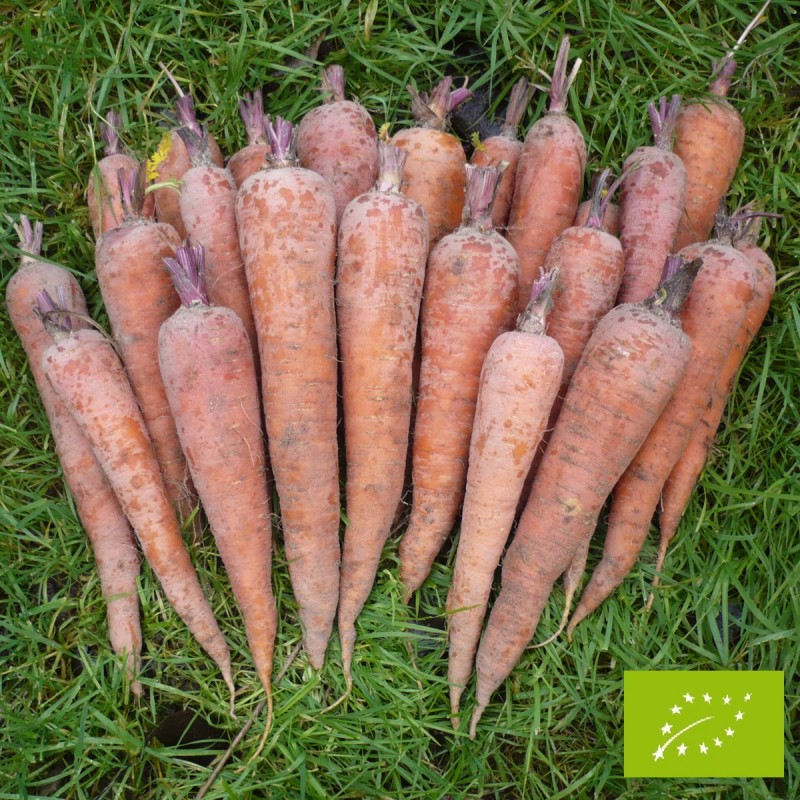
Gulerod – ‘Geant de Tiques au petiole violet’ Tidlig Øko- Udvalgt af Slow food ark of taste
37,50 kr.
Sen , meget gammel fransk sort, med ekstremt god smag, stilkene er violette forneden, ,yndigt hvis man tilbereder dem med lidt af stilken .Srød, sød , aromatisk lang gulerod, uden fibre, ikke holdbar, skal spises mens de er friske.The Tilques carrot is a hardy variety originally from the north of France (the town that gives the variety its name is in the pas-de-Calais department, northwest of Saint-Omer).
It is a large-size vegetable (its roots are 20 to 30cm long), conical-cylindrical in shape, with abundant foliage. Not very sensitive to the carrot fly, it is late-ripening; it is seeded in the beginning of May in sandy-loamy soil, and is harvested in October. Its roots are kept in their earth in heaps that form natural “silos”, made by simply stacking the carrots and covering them with straw, in cool, moist areas – in the field or in a cellar – where they can be kept until mid-April; before selling them, the carrots are brushed but not washed, to make sure they keep until eaten.
Tasty and very fragrant, with a tender, abundant inside, they are more often eaten cooked than raw: they are ideal for soups or recipes like Flemish beef stew. This carrot’s production was developed in the 19th century, with its epicentre in the town of Tilques, to the west of the Audomarois marsh. The first written mention of its cultivation in Tilques goes back to 1862, while the first reference to the variety called Tilques carrot was in 1925. Its origins could be due to the crossbreeding between the Flemish Rouge Pâle and the Longue Lisse from Meaux. Cultivation of the Tilques variety reached its peak between 1930 and 1950, thanks to a mixed system, partly intensive and partly farmer.
At the end of 1970, stacking the carrots gradually disappeared from the landscape: it was the decline in production and of natural silos, and only a few farmers continue this cultivation according to the traditional method, thus guaranteeing its survival and seed reproduction. It is thanks to the regional genetic resources centre’s perseverance and selection work and that of their partners that the Tilques carrot has been able to be re-entered into the official catalogue of French varieties. Today there subsists a lone local production that follows the traditional cultivation method on the sandy-loamy soil around Tilques, with the production of seeds, storing in natural silos and hand brushing.
The production volume has remained extremely limited and the market outlets are no guarantee, especially at a price that is fair and capable of giving value to the traditional cultivation method.
But the risk is more extensive and concerns all the Audomarois Marsh fruit and vegetable production (especially cauliflower, artichokes, leeks, endive, etc.), which only marginally supports Tilques carrot cultivation. It is a complex ecosystem whose productivity requires a specific know-how, but gives its undeniable organoleptic properties as a gift.
30 på lager
.Slow Food ARK OF TASTE Variety:
For it’s rich history and cultural significance, this pea has been chosen to board the Slow Food Ark of Taste. The Slow Food Ark of Taste is where “culinary heritage meets biodiversity.” Varieties placed on the “ark” are those whose rich history and cultural significance is well documented, yet whose existence is threatened simply by the lack of people growing and perpetuating it. Varieties of crops, like species of plants and animals, can (and do) go extinct from lack of habitat and unfavorable conditions. These varieties deserve preservation not just because they each have a great story, but because the futures of our evolving food crops depend on a rich well of genetic diversity with which they can continually adapt, and be adapted by plant breeders, to thrive in changing conditions. In the case of our food crops, the unfavorable conditions leading to a decrease in diversity are many, but one we can immediately address is the decrease in the number of people growing these crops and saving these seeds.
Customers' review
Be the first to review “Gulerod – ‘Geant de Tiques au petiole violet’ Tidlig Øko- Udvalgt af Slow food ark of taste”
Du skal være logget ind for at skrive en kommentar.
Relaterede varer
Frø til Arvesorter, Frø til Gamle Sorter grøntsager, 'Heirloom vegetable seeds'
35,00 kr.
Frø til Arvesorter, Frø til Gamle Sorter grøntsager, 'Heirloom vegetable seeds'
37,50 kr.
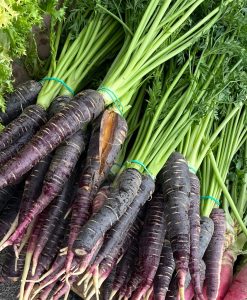
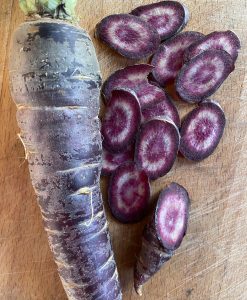
Frø til Arvesorter, Frø til Gamle Sorter grøntsager, 'Heirloom vegetable seeds'
Gulerod – ‘Black Spanish ‘ Pastanaca morada- Negra- Udvalgt af Slow food Ark of Taste
35,00 kr.
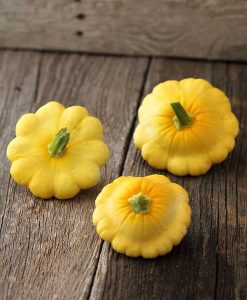
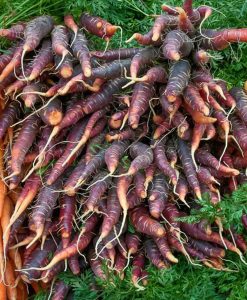
Frø til Arvesorter, Frø til Gamle Sorter grøntsager, 'Heirloom vegetable seeds'
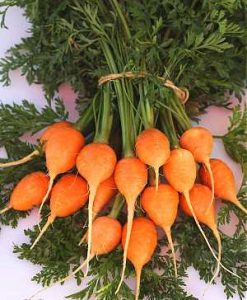
Gulerod – ‘Pariser Carotter’- Udvalgt af Slow Food ark of taste
35,00 kr.

Frøpakker - Billigere og nemmere
110,00 kr.

Frø til Arvesorter, Frø til Gamle Sorter grøntsager, 'Heirloom vegetable seeds'
32,50 kr.
Reviews
There are no reviews yet.