
Ingen varer i kurven.

Grønkål – Toscansk palmekål – Cavolo nero di Toscana – Sortkål Øko
35,00 kr.
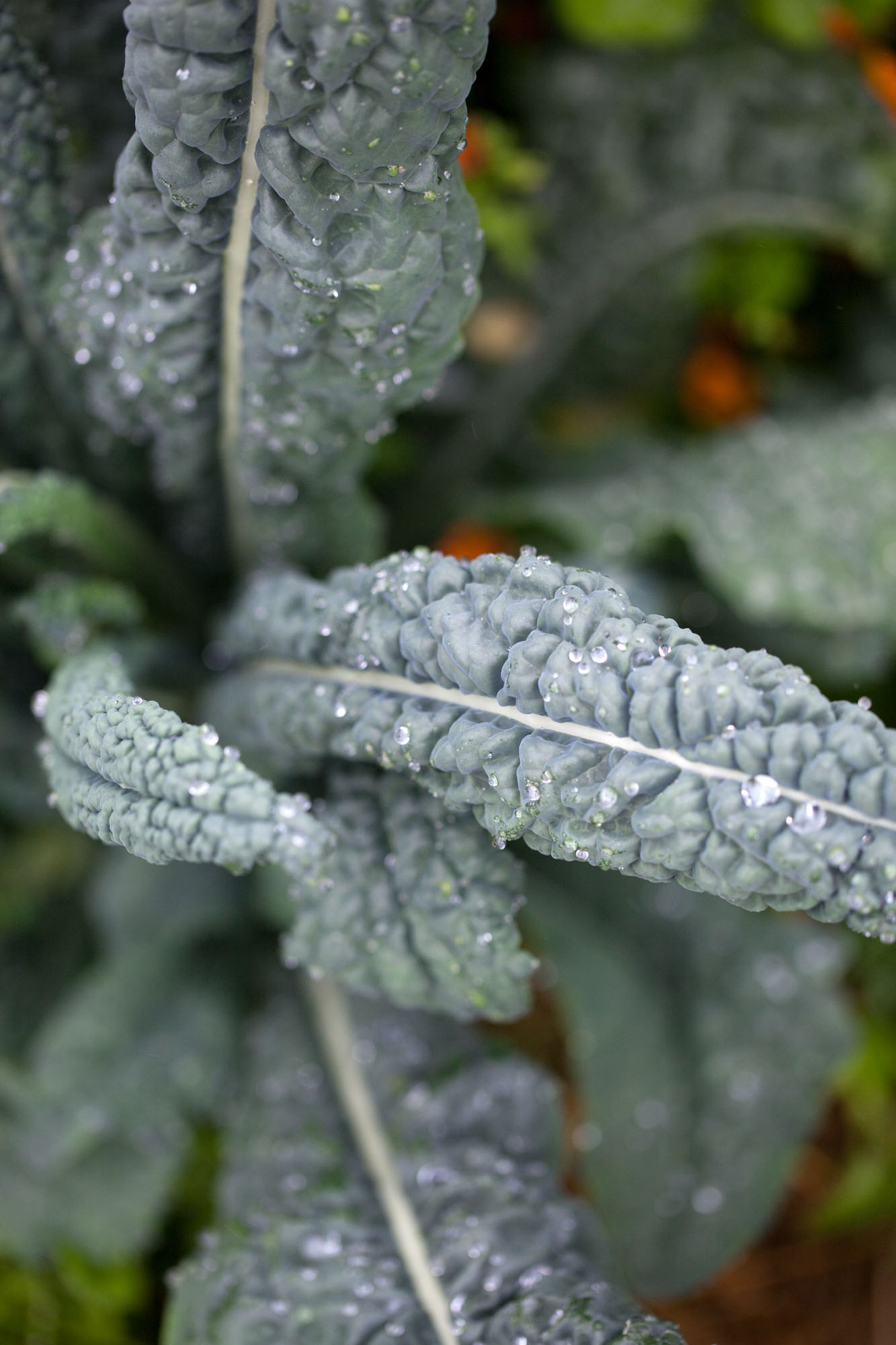
Hårdfør, men ikke som de sibiriske typer, palmeformet kål med lange mørke buklede og meget velsmagende blade.
3 på lager
Toscansk palmekål, Calvolo nero di Toscana. Høj, næsten sort kål, der vokser som en palme, med buklede blade ligesom savoykål, bare samlede, en meget smuk og aromatisk grønkål
Fra william Woys Weaver, Heirloom vegetable gardening ;
.‘Black Tuscan Palm Tree’ Kale
Brassica oleracea var. acephala
I first stumbled upon this variety of cavolo di Palma in Ottavio Targioni-Tozzetti’s Dizzionario Botanico Italiano (1825, 45–46), curiously wondering to myself whether it could be more impressive than Jersey Cow Cabbage, for surely it does not grow as tall. Later, when I saw the kale in the gardens of the Villa Barbero at Maser high in the hills of the Veneto, I realized immediately that I could not be without it. The Black Tuscan Palm Tree Kale is truly one of the most beautiful kales to grace any kitchen garden. In fact, many gardeners plant it simply for its ornamental merits. There is probably no more spectacular 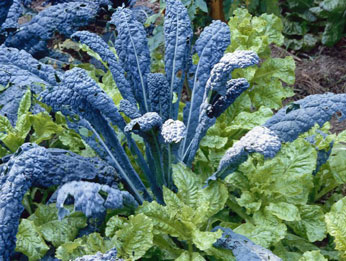 combination than to see this gray-black kale interplanted with vivid green Silesia lettuce, although the Venetian lettuce called cappuccio ubriacona frastagliata (“drunken woman frizzy-headed”) will do its own to create a carnival effect—and ever so Italian.
The Black Tuscan Palm Tree Kale dates from the eighteenth century and figures in a number of old Tuscan recipes. Prepared like chard, it has an affinity for olive oil and shallots, and goes very well with grilled Chioggia sea pumpkin. It is best when chopped, because the old leaves can be stringy; in fact concentrate on the very young leaves at the top, for they are the most tender. The same may be said for its German counterpart, Lerchenzungen Grünkohl (larks-tongue kale), a frizzy dark green kale with long, narrow leaves similar in shape to the Tuscan variety. It is also medium in height, and therefore the two can be planted together for a stunning visual effect. The German variety is completely winter hardy in Pennsylvania; in fact frost improves the flavor. The Tuscan kale, unfortunately, is extremely tender and will not overwinter in areas where the ground freezes. Even heavy frosts seem to damage it. Plants must be dug up and stored in a cool shed over the winter; I simply move the ones designated for seed saving into my greenhouse.
Since the Tuscan kale grows 2 to 3 feet tall, even higher where the ground is particularly rich, it should be spaced about 3 feet apart in order to develop a good “palm tree” shape. It can also be planted as a single specimen. The slate gray, crinkled leaves are long and narrow, often 24 inches long, and gently drooping; thus the plants require elbow room. The German sort is somewhat shorter and therefore looks better when planted in front of the Tuscan kale. Cabbage worms do not seem to bother either variety, but caterpillars of other butterfly species do. More of a problem are finches and sparrows, which sit on the plants and peck out holes in the leaves. They can leave a handsome bed of kales looking sad and shredded in a matter of days. Bird netting is the only method I have found to deal with this.
Customers' review
Be the first to review “Grønkål – Toscansk palmekål – Cavolo nero di Toscana – Sortkål Øko”
Du skal være logget ind for at skrive en kommentar.
Relaterede varer


Frø til Arvesorter, Frø til Gamle Sorter grøntsager, 'Heirloom vegetable seeds'
35,00 kr.

Frø til Arvesorter, Frø til Gamle Sorter grøntsager, 'Heirloom vegetable seeds'
36,25 kr.
Reviews
There are no reviews yet.